
LASIK eye surgery cost is almost always quoted per eye, not as a single number for both, which trips up a lot of first-time patients comparing quotes. On top of that, the advertised starting price and the price most people actually pay are often two different numbers, since promotional rates frequently apply only to the most basic version of the procedure.
This guide breaks down LASIK eye surgery cost in 2026 per eye and for both eyes, why insurance almost never covers it, and the financing and discount options that actually reduce the bill.
This article is for general informational purposes only. It is not medical advice and does not replace a consultation with a licensed ophthalmologist. Figures are 2026 industry estimates based on published provider pricing and vision-benefit data. Ask your provider for a full, written quote before scheduling surgery.
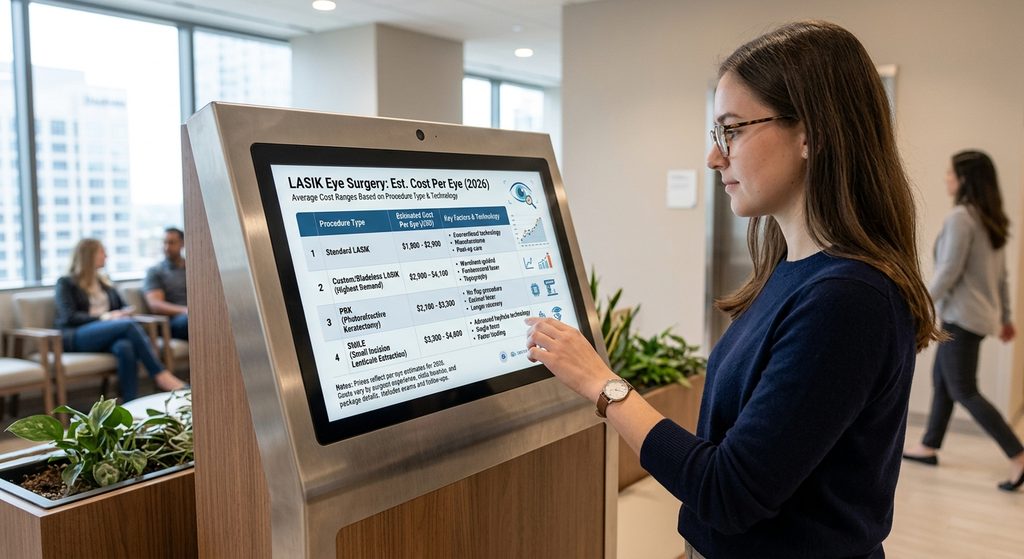
Quick Answer
LASIK eye surgery cost typically runs $1,500 to $5,000 per eye, with most patients paying somewhere around $2,200 to $2,650 per eye once they choose a specific technology and location. For both eyes, that puts a realistic total between $4,400 and $5,300, though basic conventional LASIK can come in lower and premium bladeless options can run higher.
Because standard health insurance treats LASIK as elective, most patients pay largely out of pocket, using savings, financing, or vision-plan discounts instead.
What Drives LASIK Eye Surgery Cost
1. Technology and procedure type
Not all LASIK is priced the same, and the differences add up fast:
- Conventional LASIK — the most basic version, generally around $1,500–$1,800 per eye. It suits only straightforward, lower-prescription cases.
- Custom (wavefront-guided) LASIK — maps your eye’s unique imperfections for a more precise correction, typically $2,000–$2,900 per eye.
- Bladeless (all-laser) LASIK — uses a laser instead of a blade to create the corneal flap, generally in the same $2,000–$2,900 range as custom LASIK, and often combined with it.
As a result, the “starting at” price you see advertised is almost always for conventional LASIK — so ask specifically which technology applies to your eyes before comparing two clinics’ numbers.
2. Surgeon experience and clinic reputation
Highly experienced surgeons and well-reviewed practices generally charge more per eye. That premium typically reflects lower complication rates and better long-term outcomes, so it’s worth weighing against a cheaper, less-established provider rather than choosing on price alone.
3. Geographic location
Location can swing LASIK eye surgery cost by 20–30%, mainly due to differences in facility overhead and local competition among providers. States with a lower cost of living, such as Mississippi, West Virginia, and Alabama, tend to have the lowest average prices, while high cost-of-living states like California often run well above the national average.
4. Enhancements and touch-ups
A small percentage of patients need a touch-up procedure later to fine-tune their results. Some clinics include a lifetime enhancement guarantee in the original price, while others charge separately if you need one — so it’s worth asking about this upfront rather than assuming it’s covered.
LASIK Eye Surgery Cost by Type (Per Eye)
| Procedure type | Typical cost per eye |
|---|---|
| Conventional LASIK | $1,500 – $1,800 |
| Custom (wavefront-guided) LASIK | $2,000 – $2,900 |
| Bladeless (all-laser) LASIK | $2,000 – $2,900 |
| PRK (an alternative with longer recovery, often similar pricing) | $1,800 – $2,800 |
For a closer look at how PRK compares, see our PRK vs LASIK cost guide.
LASIK Eye Surgery Cost for Both Eyes
Since almost everyone treats both eyes in the same session, here’s what that typically totals:
| Scenario | Typical total cost (both eyes) |
|---|---|
| Conventional LASIK, both eyes | $3,000 – $3,600 |
| Custom or bladeless LASIK, both eyes | $4,000 – $5,800 |
| National average, both eyes combined | ~$4,400 – $5,300 |
A price advertised well below these ranges is often for conventional LASIK only, or excludes the pre-op exam and follow-up visits — so always confirm exactly what’s included before booking.
Does Insurance Cover LASIK Eye Surgery Cost?
Almost never. Standard health insurance and vision insurance both classify LASIK as an elective, cosmetic procedure rather than medically necessary treatment, so neither typically covers it — and Medicare and Medicaid don’t cover it either. That said, a few narrow exceptions exist:
- Documented medical necessity after an injury or prior surgery that caused significant vision problems
- Certain occupations — for example, some military or professional athletic roles — where employer-sponsored coverage occasionally applies
Because these exceptions are rare and require substantial documentation, most patients should plan to pay largely out of pocket. See our dedicated guide on does insurance cover LASIK for a specific exception most patients don’t know about.
Ways to Lower LASIK Eye Surgery Cost
Even without insurance coverage, several options meaningfully reduce the bill:
- Vision insurance discounts. Providers such as VSP and Humana Vision often negotiate reduced rates with specific network clinics — sometimes $1,300–$2,000 per eye instead of the standard price. Check your specific plan’s provider list before booking.
- HSA and FSA funds. LASIK generally qualifies as an eligible expense under both, which effectively discounts the procedure by your marginal tax rate — often 20–35% in practical terms.
- Employer and union discounts. Some large employers negotiate exclusive rates with LASIK providers, so it’s worth checking with HR even if your standard health plan doesn’t cover the procedure.
- Cash-pay discounts. Paying the full amount upfront, instead of financing, often saves an additional 10–20% off the quoted price.
- Financing plans. Medical credit cards (like CareCredit or Alphaeon Credit) commonly offer 0% APR for 12–24 months, and many clinics also split the total into 6–12 interest-free monthly installments directly.
Before choosing financing, compare the total cost over the full repayment period — promotional 0% offers can carry steep retroactive interest if you don’t pay off the balance in time.
The American Academy of Ophthalmology publishes patient education on who’s a good LASIK candidate, and the FDA’s LASIK resource page explains the procedure’s risks and what to ask before choosing a provider. If you’re also considering a newer alternative, see our SMILE eye surgery cost guide.
Questions to Ask Before You Book
- Which LASIK technology does this price include — conventional, custom, or bladeless?
- Does the price cover the pre-op exam, the procedure, and all standard follow-up visits?
- Is a touch-up or enhancement included for free if I need one later, and for how long?
- Does my vision insurance plan offer a discount at this specific provider?
- What percentage of your patients need an enhancement procedure, and how does that compare to industry averages?
Frequently Asked Questions
Why do LASIK quotes vary so much between clinics? Mostly because “LASIK” covers several different technologies at different price points. A $1,500 quote and a $2,900 quote may not be for the same procedure, so always confirm which technology and which specific inclusions the price covers.
Is cheaper LASIK a red flag? Not automatically, but heavily discounted “bargain” pricing sometimes excludes the pre-op exam, aftercare visits, or enhancement coverage. Since a botched result is far more costly than the savings, it’s worth asking exactly what a low quote includes.
Can I use my HSA or FSA for LASIK? Yes, in most cases. Both accounts generally treat LASIK as an eligible medical expense, which lets you pay with pre-tax dollars and effectively lowers your net cost.
How long does LASIK recovery take, and does that affect the total cost? Most patients return to desk work within a day and clear strenuous activity within about a week, though this varies by individual. It’s worth factoring in any time off work, since that’s a real cost even though it isn’t part of the clinic’s quoted price.
Sources and pricing benchmarks referenced in this guide come from 2026 provider pricing, vision-benefit data, and industry cost analyses in the US. This article doesn’t recommend any specific clinic, surgeon, or financing provider. Confirm current pricing directly with a provider, and consult a licensed ophthalmologist to determine whether LASIK is right for you.